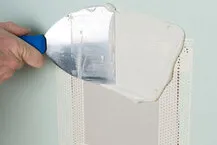
Detroit homes built before the 1950s mostly have plaster, and later ones have drywall. We repair both. Holes are patched, cracks are filled or taped, loose plaster is secured and every repair is sanded and primed so it does not show through the finish coat.
Walls in Detroit come in two kinds. Houses from the first half of the last century have plaster over wood lath, or over a gypsum board base in the later ones. Newer houses, additions, finished basements and many remodeled kitchens have drywall. Plenty of homes have both, sometimes on the same wall. We repair either type. Knowing which one you have matters, because a patch that suits drywall will crack loose if it is used the same way on plaster.
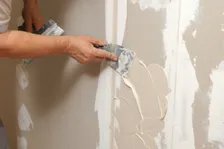
Small dents and nail pops are filled, sanded and primed. A hole from a door knob or a plumbing repair gets a new piece of drywall cut to fit and screwed to backing, then taped and coated with joint compound in thin layers. Each layer has to dry before the next. Plaster that has pulled away from its lath is fastened back or cut out and filled. Texture is matched as closely as hand work allows, and every repair is primed so it does not flash through the paint.
Water is behind many of the repairs we see: a roof leak, an ice dam at the eaves, a bathroom above the dining room. The leak must be fixed before the wall or ceiling is, or the stain and the damage will come back. Once the area is dry we cut out soft material, patch it and seal the stain. Sanding makes dust, so we close off the room and cover the floors. In older homes we avoid dry sanding old painted surfaces that may contain lead.
Drywall repair in Detroit: common questions
Is it worth repairing old plaster, or should it be replaced with drywall?
Sound plaster is hard, quiet and worth keeping. Cracks and small loose areas can be repaired. Replacement makes sense where plaster has let go over a large area or been ruined by water. We look at each wall and tell you which way is more sensible.
Will the patch show after painting?
A good patch is flat, feathered wide and primed, so it should not stand out. In strong side light a trained eye can sometimes find one. Painting the whole wall, not only the patch, gives the most even result.
Do you fix ceilings as well as walls?
Yes. Sagging plaster ceilings, cracks along joints and water stained sections are common jobs. Ceiling work is done from stable platforms, the room is covered, and a stain sealing primer goes on before the ceiling is painted.
How it works
- Free estimate: Call, text or book online. We walk the job and measure.
- Written quote: Prep, paint and price in writing.
- Prep & protect: We cover floors and furniture, repair and prime surfaces.
- Paint & walk-through: Two coats, clean lines, full clean-up and a final walk-through.